
- Missed call follow-up for real estate means calling back every buyer you couldn’t answer. When a buyer calls about a property, they’re ready to talk. If you miss that call, they won’t wait long for you.
- Call back fast, because the first agent to respond usually wins. Most buyers call several agents about the same kind of property. Try to call back within 15 minutes during working hours.
- If the buyer doesn’t pick up your callback, send a WhatsApp message. Many people ignore calls from unknown numbers. A short message that names the property they asked about keeps them interested until you can talk.
- Check all your missed calls every evening. Count how many missed calls are still not returned. Call those buyers first the next morning so no one gets forgotten.
You’re at a site visit, guiding a family through the layout of a 3 BHK. Your phone rings. It’s a fresh buyer inquiry. You glance at the screen, but you can’t pick up. By the time you call back, the buyer’s moved on; maybe to another broker.
Missed call follow-up for real estate is the process of calling back, messaging and tracking every unanswered buyer enquiry until it turns into a conversation. Buyers usually shortlist several properties and engage whoever responds first, so a slow callback often means a lost deal. A good system logs each missed call, assigns an owner, sets a callback deadline and tracks every attempt.
This guide shows you how missed calls turn into conversations. How to set up the missed call follow-up system: when to call back, how many times to try, what to send on WhatsApp, and which parts you can automate.
Why Do Missed Calls Cost Real Estate Teams So Many Deals?
Today’s buyers have endless choices. They’re driven by immediacy bias, choosing the option that responds first.
Speed matters more than most teams think. Research published in Harvard Business Review found that companies contacting a new lead within an hour were nearly 7 times more likely to qualify it than companies that waited even an hour longer.
This isn’t just about convenience; it’s about trust formation. Psychologically, the first responder is perceived as more reliable, increasing the likelihood of commitment.
So a missed call isn’t a lost lead yet. What turns it into one is a slow, unplanned callback. For a closer look at why buyers rarely call twice, read our guide on missed calls in property sales.
Why Do Real Estate Agents Miss So Many Enquiry Calls?
In real estate, the gap between interest and action is measured in minutes. Buyer urgency rarely aligns with your operational availability, and that’s where calls get missed:
- Weekend site visits: Saturdays and Sundays are peak visit days. While you’re walking a family through the sample flat, two or three new enquiries can ring through, and you can’t step away mid-tour to take them.
- Negotiations and paperwork: a token-amount discussion, home-loan documents with the bank, or a registration appointment at the sub-registrar office can tie you up for hours. None of them can be paused for a new call.
- Driving between projects: brokers often cover several sites in a day. A call that comes in during a long drive across town usually isn’t returned until you park, and by then the buyer may have called the next broker on their shortlist.
- Evening and NRI calls: salaried buyers call after work, late in the evening or on Sundays when your office is closed. NRI buyers in the Gulf, UK or US often call outside Indian office hours altogether.
- Portal and ad spikes: a new listing on 99acres or MagicBricks, a weekend newspaper property ad or a project launch can bring a burst of calls in the first few hours. With only one or two people on the phones, some calls are missed simply because the line is busy.
Consider this: You might handle 17 calls in a day and miss three. But not all calls are equal. The missed call could be the one where the buyer was ready to block the unit.
How Much Are Missed Calls Costing You?
Here’s what that looks like in real terms: You’re a builder getting 320 calls a month. Your average deal size is ₹45 lakh. Missing just 20 calls (around 6%) could mean losing deals worth ₹9 crore every single year. That’s 240 missed calls a year, and it assumes that just 1 in 12 of them would have closed.
Stop losing revenue to missed calls. Use the Lead Leakage Calculator on Callyzer’s real estate call tracking software page.
How Do You Set Up Missed Call Follow-Up for Real Estate Teams?
A missed call follow-up system has five parts. Each one closes a specific gap where leads usually slip away.
Step 1: Log every missed call automatically
Your phone’s recent-calls list isn’t a system. Missed calls get buried under new calls, and nobody can see them across five agents’ phones. Every missed call needs to land in one shared list the moment it happens.
It also helps to know where each call came from. With property enquiry call tracking, you can see which listing or ad made the phone ring, so callbacks to your highest-value campaigns go first.
Step 2: Give every missed call an owner
Calls to the office number, or to an agent who is on leave, need a named person responsible for the callback. If everyone is responsible, nobody calls back.
Step 3: Set a callback deadline
Agree on a team rule and write it down. For example: call back within 15 minutes during working hours, and by 10:30 AM the next day for after-hours calls.
Step 4: Send a WhatsApp if the callback doesn’t connect
Many buyers won’t pick up calls from unknown numbers, even when they’re actively looking. In India, sending a voicemail rarely gets you a call back. That’s why a quick SMS or WhatsApp follow-up often works better, keeping the conversation warm while their interest is fresh.
Step 5: Review open missed calls before the day ends
Every evening, check one number: how many missed calls are still open. Those are the first calls tomorrow morning.
Doing it manually: a shared Google Sheet with columns for caller number, time, property, owner, callback time, attempts and status works for 1–3 agents. Beyond that, it usually breaks down because agents stop updating it.
No More Blind Spots: How Callyzer Converts Missed Calls into Real Estate Sales
How Does Callyzer Show Which Missed Calls Haven’t Been Returned?
No buyer gets forgotten.
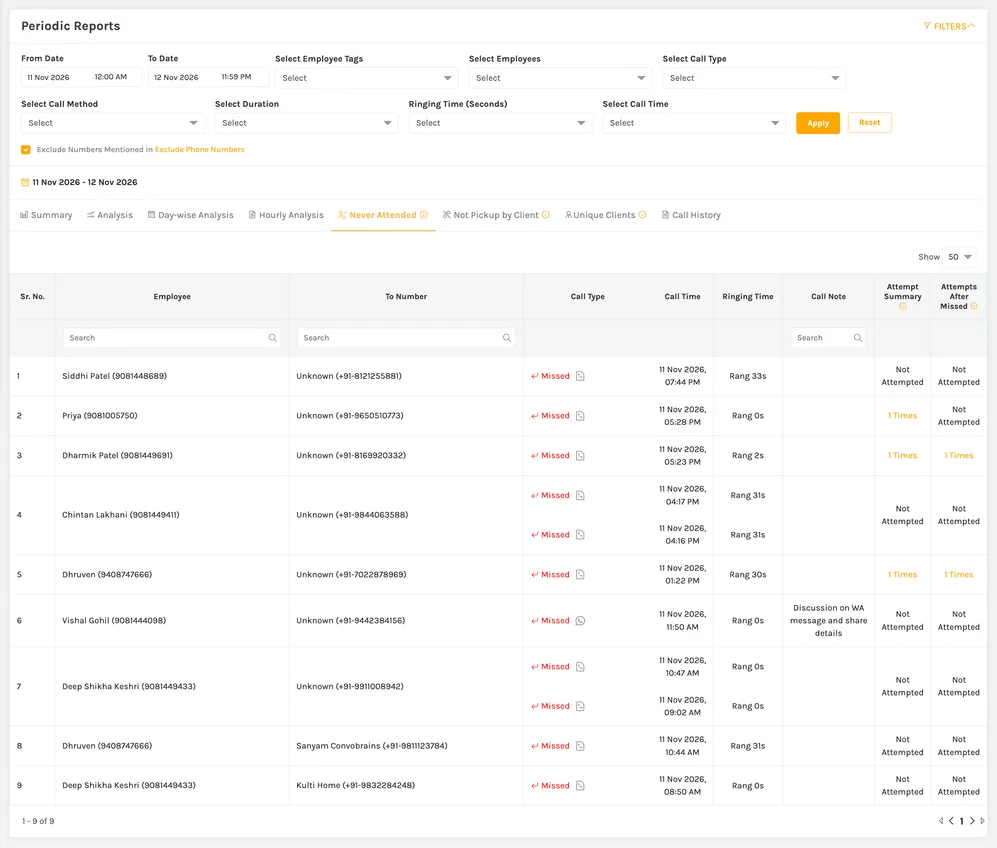
Callyzer’s Never Attended report keeps every unreturned missed call in one list until someone calls the buyer back. A buyer who rang during a Sunday site visit is still at the top of the list on Monday morning, instead of buried in an agent’s call log.
You know who actually called back.
Each missed call shows whether anyone on your team has tried to reach the buyer, and how many times. You don’t have to chase agents for updates. “Not Attempted” tells you straight away which buyers nobody has called.
You know who needs a WhatsApp next.
When an agent calls back and the buyer doesn’t pick up, Callyzer lists that call under Not Pickup by Client. Your team knows exactly which buyers to message, instead of guessing who has gone quiet.
You end every day knowing which leads are still open.
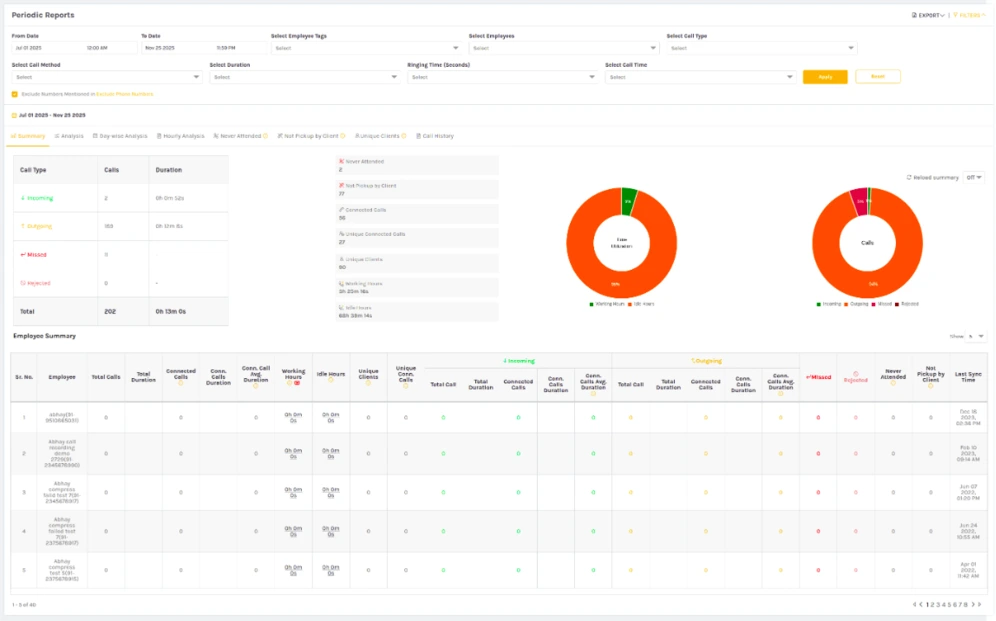
The Summary tab shows, for the whole team and for each agent, how many missed calls came in, how many are still unreturned and how many became connected calls. At a glance, you know which buyers to start with tomorrow and which agent needs help.
How Many Times Should You Follow Up on a Missed Call, and When?
One callback is rarely enough. A good real estate missed call follow up plan uses a short, planned cadence instead of calling whenever you remember:
| When | What to do |
|---|---|
| Within 15 minutes | Call back. If there’s no answer, send WhatsApp message. |
| Same evening | Call again at a different hour. |
| Day 1 | Call at a different time of day (morning if your first try was in the afternoon). |
| Day 3 | Send options or a brochure on WhatsApp, then call. |
| Day 7 | Send a final message, then move the lead to a slower nurture list. |
Every message in this sequence should give the buyer something useful: a callback time, options in their budget or the details they asked for.
Can You Set Up Automatic Follow-Up for Missed Calls?
Partly. Automate everything that doesn’t need judgment: logging missed calls, alerts, assigning callbacks, reminders, ready-to-send message templates and daily reports.
Keep a person in charge of the parts that do need judgment: the callback conversation itself, qualifying the buyer’s budget and location, and booking the site visit. Buyers can tell a canned reply from an agent who actually remembers what they asked about.
What Should a Missed Call Follow Up Message for Real Estate Say?
A good follow-up message does three things: it acknowledges the missed call, names the property the buyer asked about, and offers one easy next step.
With Callyzer, your team doesn’t need to type from scratch.
It provides a ready set of WhatsApp templates your agents can instantly send, making follow-ups consistent and fast. Here are six missed call WhatsApp messages for real estate teams, in the order you’d send them:
1. Within 2 minutes (you know the property):
2. Within 2 minutes (you don’t know what they called about):
3. After office hours:
4. For a portal lead:
5. Day 2, no reply:
6. Final message:
Simple, friendly, and direct. This keeps you on your buyer’s radar while their interest is still fresh. Keep each message to two or three lines; long messages from unknown numbers get ignored.
Takeaway
It’s easy to think the solution is getting more calls. But in real estate, the real edge comes from making every call count. Missed calls aren’t just unanswered rings. They’re often serious buyers ready to take the next step. And in property sales, most buyers won’t call twice.
Good missed call follow-up for real estate comes down to five habits: log every missed call, give it an owner, call back within your deadline, follow up on WhatsApp, and review open calls every evening.
In this market, the difference between a lost lead and a closed deal often comes down to how fast and how consistently you act.
Turn Missed Calls into Second Chances
You can’t pick up every call. But losing a buyer because of it? That’s preventable with Callyzer.
Callyzer doesn’t just tell you who was the caller; it gives you a system to act before the buyer moves on. Track every missed call, see who followed up, and turn WhatsApp or callback nudges into site visits and closings.
Frequently Asked Questions
What is missed call follow-up in real estate?
Missed call follow-up in real estate means calling back every buyer whose call you couldn’t answer, and keeping track until you speak to them. It usually includes a quick callback, a WhatsApp message if they don’t pick up, and a few more attempts over the next few days.
How do you follow up on a missed call from a property enquiry?
Call the buyer back as soon as you can. If they don’t answer, send a short WhatsApp message with your name, your company and the property they asked about. Then try calling again at a different time of day. Keep a note of every attempt so nothing is missed.
How soon should you follow up after a missed call from a property buyer?
Within 15 minutes is best during working hours. Buyers often call several agents about the same kind of property and go with the one who responds first. If the call came after office hours, send a WhatsApp message right away and call back first thing the next morning.
How many times should I follow up with a lead who didn’t pick up?
Try about five times over a week: call back the same day, again that evening, then on Day 1, Day 3 and Day 7. Mix calls and WhatsApp messages. If there’s still no reply after a week, move the buyer to a slower list and share new options once in a while.
Why do real estate teams lose leads from missed calls?
Agents are often busy with site visits, meetings or driving between projects when buyers call. Many teams also have no system to track missed calls, so callbacks are delayed or forgotten. By the time someone calls back, the buyer has often spoken to another agent.
How do you talk to a customer in real estate?
Start by saying who you are and why you’re calling. Then ask simple questions: which area they want, their budget, and how soon they plan to buy. Listen more than you talk, share only options that match what they said, and end with a clear next step, such as booking a site visit.