In the DSA banking business, every call is a potential lead looking for quick answers on loans, credit cards, bank account opening, or other banking services.
Customers rarely wait around. If their call goes unanswered, they usually dial the next available DSA. In such a competitive space where response time directly affects conversions, even a single missed call can mean losing a valuable client.
Research published on ResearchGate highlights why this matters: effective telemarketing in banking services can boost customer acquisition by up to 28% and improve customer retention by up to 12%.
The Hidden Cost of “Just One Missed Call” in DSA Banking Business
What you do not answer, your competitor will. The cost does not hit your P&L(Profit & Loss Statement) today. It distorts your funnel tomorrow.
Slower Conversions: Every missed call delays your first response. The longer prospects wait, the colder they get, stretching your sales cycle and forcing extra follow-ups or discounts.
High-Value Deals Lost: Premium products like home loans, credit cards, and balance transfers often start with a phone call. Missed calls shift your portfolio toward smaller deals, lowering revenue per lead.
Wasted Marketing Spend: Each missed call from a campaign is money lost. Beyond the immediate loss, ad platforms miss conversion signals, weakening targeting and raising future costs.
Extra Work for Teams: Staff spend hours calling back unknown numbers, updating CRM data, and producing exception reports instead of selling.
Reputation Damage: In financial services, responsiveness builds trust. Ignored prospects rarely call again, and referrers start routing leads to faster competitors.
Compliance Risks: Redialing aggressively or using generic callbacks can breach consent rules, creating complaints and reputational damage.
👉 Curious how much revenue your missed calls are costing? Check out our Missed Call Revenue Calculator to see the impact in real numbers.
Why Your Call Management Fails (or Isn’t There at All)
For many DSAs, missed calls are not just bad luck. They show deeper problems in the system.
Here is why your current setup often fails or may not even exist.
Reliance on Manual Processes
Many DSAs still track leads using spreadsheets, notes, or scattered CRMs. While this may seem manageable at first, it quickly becomes chaotic as call volumes rise.
Manual logging increases the chances of errors, lost leads, and delayed responses. What’s worse, your team wastes hours chasing data instead of talking to prospects.
Lack of Real-Time Lead Visibility
Without a system that tracks calls in real time, you have no way of knowing which prospects are waiting for an immediate response. A missed call may go unnoticed, and by the time your team tries to follow up, the lead could already be lost or much harder to convert.
In the banking sector as a whole, where multiple DSA agencies are engaged by the bank, prospects have many options and can contact three competitors in a single day. That makes speed everything.
Poor Lead Prioritization
Not every call is equal, but most DSAs treat them that way. High-value inquiries like home loans, credit cards, or premium account openings get lost in the noise of smaller-ticket queries.
Without a way to score or prioritize leads, your team may respond too late, leaving lucrative opportunities for competitors.
No Automation or Follow-Up System
When your team is busy or away, calls slip through the cracks.
Missing call logs, reminders, or follow-up schedules quickly create the feeling that no one is paying attention. And in that small gap, trust fades, and the prospect often moves to the business that replies first.
Limited Analytics and Feedback
Traditional call handling rarely gives insights into performance.
You don’t know:
Which campaigns generate quality leads?
Which agents respond fastest?
Where do most calls drop off?
When there’s no analytics to guide decisions, the team ends up working in the dark and repeating mistakes that quietly drain revenue.
Cultural and Training Gaps
Even the best tools fail if your team isn’t trained or motivated to use them properly.
Many DSAs lack structured processes for answering calls promptly, following up consistently, and maintaining a professional experience for every lead.
The Game-Changer: How Smart Call Tracking Turns Missed Calls into Recovered Leads
Every missed call has two sides: the loss of a potential customer, and the loss of valuable data about where that lead came from. Traditional call handling systems often stop at the point of the missed call — nothing gets logged, nothing gets followed up, and the business is left guessing.
Smart call tracking changes that story. It transforms missed calls from dead ends into actionable opportunities by capturing data, assigning responsibility, and ensuring structured follow-up.
Here’s how:
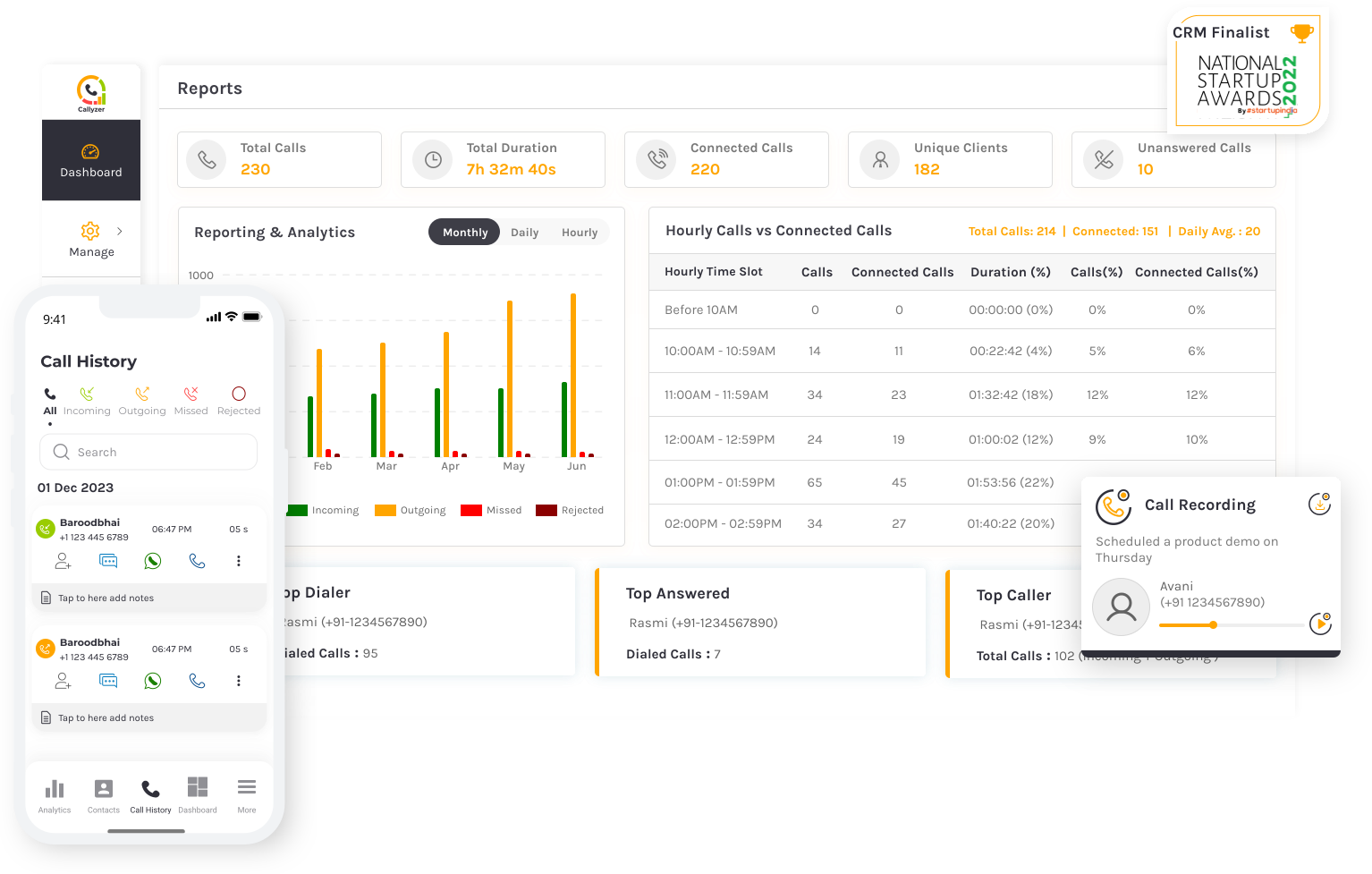
Real-Time Call Analytics and Tracking
With smart call tracking, every call is recorded in real time — whether it was answered, missed, or even abandoned midway. This gives DSAs immediate visibility into:
Call volumes: peak hours, daily patterns, and high-demand periods.
Agent responsiveness: who is answering promptly and who needs coaching.
Missed call trends: how many leads are slipping through, and when.
Instead of reacting days later, managers can act instantly, keeping lead velocity strong and preventing pipeline delays.
Automatic Assignment and Call-Back Flows
Missed calls often fall into a gray area: Who owns the follow-up? When should it happen? Too often, the call simply gets forgotten.
With automated assignment:
Calls are distributed instantly to the right agents based on availability or rules you set.
Structured call-back flows ensure no lead is left hanging.
Managers can track whether the follow-up happened on time, without relying on manual check-ins.
This systemized recovery turns a potential loss into a second chance to close.
Source Attribution: Know Which Channels Work
For DSAs, not all calls are equal. A call from a Facebook ad may carry a different intent than one from a referral or walk-in. Smart tracking logs the exact source of every call, giving you:
Clarity on which campaigns are producing quality leads.
Accurate ROI measurement for every rupee spent on marketing.
Insights to optimize budgets toward high-performing sources.
This means you stop blindly blaming “lead quality” and start making data-driven marketing decisions.
Integrated Notes and Follow-Up Reminders
An often-overlooked challenge is context loss. When an agent finally connects with a lead, they may not remember the details or promises made. Integrated notes solve this by:
Allowing agents to log customer requirements, loan preferences, or objections right after the call.
Setting reminders for the exact follow-up date and time.
Ensuring that if one agent is unavailable, another can pick up seamlessly with full context.
This reduces friction, improves customer experience, and ensures continuity in every interaction.
Why Callyzer Fits DSAs Best
The biggest hurdle for DSAs is that most enterprise call-tracking solutions are expensive, complicated, and IT-heavy. That’s why many teams avoid them altogether — until the cost of missed calls becomes too high to ignore.
Callyzer solves this problem with SIM-based technology that is:
Easy to set up: no heavy infrastructure, no complex integrations.
Affordable: designed for lean DSA teams where margins matter.
Scalable: whether you’re a solo agent or a 200-person team, the system grows with you.
With Callyzer, DSAs get enterprise-grade call tracking without enterprise-level headaches. The result: every missed call is captured, every lead is assigned, and every opportunity is given a fair shot at conversion.
Take Action: Quantify Your Own Leakage
Think about your own business for a moment.
How many calls slip through unanswered each day?
How many in a week?
What does that add up to in terms of lost customers, wasted marketing spend, and missed revenue?
The numbers are often far higher than most Banking DSAs imagine.
👉 Visit our dedicated DSA call tracking page for Banking and Finance Industry and try the interactive Missed Call Revenue Calculator.
The results may surprise you!
Conclusion: From Panic to Profit
Missed calls no longer need to be a source of stress. With the right systems, DSAs can move from losing opportunities to confidently converting every lead. It is about working smarter, not harder, and making sure every potential commission reaches you, not your competitor.