
A telesales pitch isn't a memorized script, it's a short, clear case for why your product solves the prospect's actual problem, made in the first few minutes of the call. The blog covers how to write and structure one, how to adjust it for cold calls, warm leads, referrals, renewals, and B2B, plus example scripts, delivery tips, common mistakes, and how to measure whether a pitch actually works.
A few months back, I pulled about forty recordings from one of our telecalling teams. Every telecaller was pitching the same product, using the same script, and got the same training. But the close rates were nowhere close to each other.
The difference wasn't talent. It was how each caller used that same script, especially in the first thirty seconds of the call.
I've spent years building sales teams and listening to what actually works on real calls. This guide comes from that: real scripts, the structure behind them that works, and the small changes that decide whether a pitch lands.
What Is a Telesales Pitch?
A telesales pitch is what a salesperson says on a call to convince a prospect that a product or service is worth their time, their money, or at least a second conversation.
It's not a monologue, and it's not a script read word for word. It's a short, clear case for why this product or service solves a real problem the prospect has, made within the first few minutes of the call.
Some people call it a telemarketing sales pitch. Others just call it a call pitch. Same idea, different name.
A phone sales pitch isn't the same as a cold call. The cold call is the attempt itself, reaching someone who wasn't expecting you. The pitch is the conversation with the prospect once they've picked up, and it works best when it sounds like a real conversation rather than a rehearsal.
I've sat through enough bad ones to know the difference inside the first ten seconds.
How Do You Write an Effective Sales Pitch?
Know who is at the other end
One thing that I always tell my new recruits is this: the pitch meant for a busy shopkeeper and the pitch meant for a Human Resource Manager should be different even when they are talking about selling the same product.
Find out whatever you can before making that call: their industry, number of people working with them, have they called before?
If your system logs past calls, look at it and check when was the last time you or any other team member spoke to the prospect. It is also helpful if you have notes attached to the call log explaining what happened during the last conversation .
All this is important because opening with "last time we spoke, you mentioned..." changes the whole tone of a call before you've said a word about the product.
Keep the language plain
I learned this early in my career. Keep your language simple. Tell the prospect what the product does for them. Don't explain how it works.
For example, "this cuts your follow-up time in half" is easy to understand.
"This leverages automation to optimize your workflow" is not.
The prospect has to stop and think about what that means. Most people just stop listening instead.
We have a longer list of words that work well on a call, and words to avoid, in sales words and phrases that close deals.
Give the call a shape
A pitch needs structure. Without one, the call goes off track fast, often within the first thirty seconds. I've heard hundreds of calls like this.
You don't need to memorize a script word for word. You just need a clear shape to follow.
Let the prospect talk too
A monologue is the clearest sign of a weak telecaller. It's the mistake I correct most often when I listen to calls.
Ask something early to find out where they stand. For example: "What are you using for this right now, if anything?" This tells you if they already have a solution in place, so you're not guessing. Wait for the real answer. Don't rush past it.
Here's a simple rule I give my own teams: if you're talking more than 60 percent of the call, you're pitching at someone. You're not talking with them.
Plan for Objection Handling in advance
Objections aren't a sign the call is going badly. I used to think they were, early on.
They show up on nearly every call that goes anywhere, and a caller who expects them sounds calm instead of caught off guard.
In my experience, most fall into a handful of buckets:
- Price: "it's too expensive," or "we don't have the budget for this right now."
- Authority: "I need to check with my manager," or "that's not my call to make."
- Trust: "we've been burned by something like this before."
- Timing: "call me back next quarter."
Listen fully, acknowledge what they said without arguing, ask one question to find the real concern underneath, then respond. Jumping straight to a rebuttal usually makes an objection harder to get past, not easier.
It's a lesson that took me longer to learn in my initial days.
Revisit the script often
Even a solid telemarketing script goes flat after six months, and you won't know unless you check.
I say this in nearly every training I run: pull a handful of recorded calls each week.
Listen for where people hang up, where they go quiet, which opener actually gets a real response. The best source of a better script usually isn't a strategy meeting. It's your own top performer's call.
How Do You Structure a Sales Pitch?
Most telesales pitches that convert follow roughly the same shape underneath the specific wording. This is the structure I've settled on after years of listening to calls that worked and calls that didn't.
- A quick, friendly introduction. Who you are, where you're calling from, in one breath.
- Check if it's actually a good time. Asking a prospect,"Do you have two minutes?" costs nothing and it saves the rest of the pitch from landing on someone half-listening on their way into a meeting.
- Lead with the benefit your product or service offers, not the features. Say what changes for them before explaining how. The how only matters once they already care about the what.
- Ask about their pain points before you pitch. Before starting the pitch, ask the prospect about which product or services they are currently using and if they are facing any problem with their current process.
For example, you can ask a prospect, “As your team size is growing, is there any particular pain point or issue you are trying to solve”
Most scripts skip this and jump straight into the sales talk. When you ask first, your pitch can respond to what they just told you, instead of sounding like the same pitch you give everyone.
- Deliver the pitch itself. This is where you use what they just told you in step 4. If they said their team struggles with follow-ups, for example, lead with how your product fixes exactly that.
A pitch built this way feels personalised, not the same one which sounds robotic.
- Handle whatever objection shows up. Stay calm, and follow four steps: listen to what they say, acknowledge it, ask a question to understand it better, then respond.
- Ask for something specific. End the call by asking for one clear next step, like a follow-up call, a demo, or a simple yes or no. Don't just say "let me know if you're interested." That kind of ending rarely gets a response.
This structure isn't just for one pitch. It works as a framework your whole team can use. Our sales call script templates shows you how to build it into scripts every caller on your team can follow.
Here's something worth checking before you set your team's calling hours: connect rates change throughout the day, they aren't the same in the morning as they are in the afternoon.
When I pull the numbers in Callyzer, connect rates climb through the afternoon and get close to 60 percent around 5 PM. That's well above the morning average. Callbacks made in that window also get more responses.
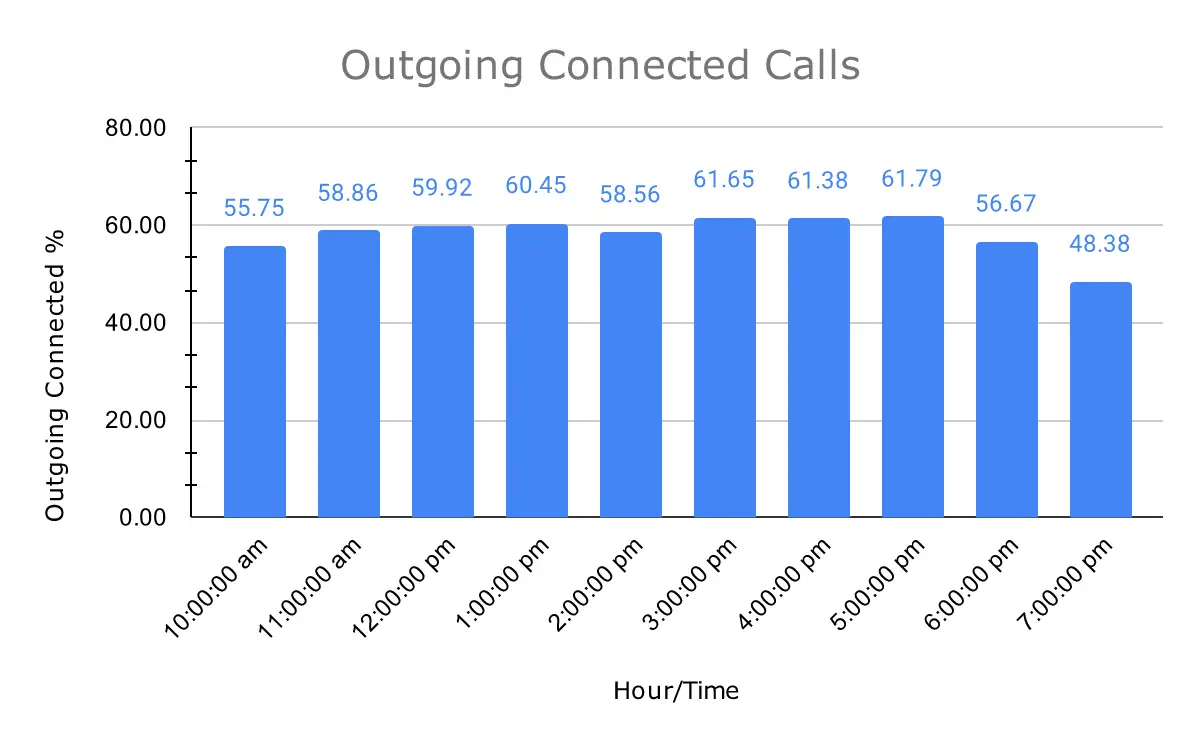
Many teams only call in the morning because that's when the shift starts. If yours does this, you're probably missing the hours when people actually pick up the phone.
How Do You Adapt Your Pitch for Different Situations?
The structure above holds up across most calls, but the details shift depending on who you're calling and why.
I've run teams that handle all five of these in the same week.
- Cold calls need the shortest, clearest opening of any pitch type, since there's no context to lean on yet. Get to the benefit fast, and don't be surprised if the first ask is just permission to send more information rather than a full close.
- Warm leads already have some interest, someone who filled out a form or downloaded a guide. Reference what they engaged with directly instead of starting from zero. "I saw you downloaded our pricing guide" beats a generic introduction every time.
- Referral calls get an easier hearing because someone the prospect trusts sent you their way. Say that person's name early. It does more for your credibility than the rest of the pitch combined.
- Renewal and upsell calls work differently from every other type here.
Don't put every customer on this list. Start with the ones close to their renewal date, and the ones using the product heavily enough that they're close to outgrowing their current plan.
Those two groups are the most likely to say yes. Lead the call with the results they've actually gotten so far.
Then ask directly: renew at the current plan, or move up to the next tier. This isn't the moment for a soft check-in. It's the moment to ask for the decision. - B2B pitches almost always have more than one decision maker involved, even when you're only talking to one person on the call. Gatekeepers and multiple rounds of follow-up are normal here.
Plan for both.
The bigger mistake teams make is missing who the real skeptic is. It's often not the person who signs off. It's the one who stays quiet or pushes back the hardest.
Answer that person directly, not just the decision maker. I've watched deals stall for months because the whole team focused on the decision maker and ignored the skeptic sitting right there in the room.
None of this replaces having an actual sales plan behind it. Adapting your pitch call by call is one thing. Having a plan for how your whole team approaches sales, from lead source to close, is another.
Our guide on how to create a sales plan covers that bigger picture.
Telemarketing Sales Pitch Examples
Generic Telesales Pitch
Need a script for starting calls? The general telemarketing script is what you're looking for. It helps start conversations, discuss what we offer, and see if there's interest.
Tele Caller (Anjali): Namaste! May I speak with Aakash?
Aakash: Yes, Speaking.
Tele Caller: Hi Aakash, my name is Anjali, and I'm calling from XYZ Insurance Company. I hope you're doing well today.
Aakash: Hi Anjali, I am doing good.
Tele Caller: Great! I wanted to speak to you about Life Insurance Policy. Is it a good time to talk?
Aakash: Yes!
Tele Caller: At XYZ Insurance, we offer simple and affordable insurance plans that can cover you in case of unexpected events. We have plans for health, life, and even to protect your home and belongings. The best part is, these plans can help you with hospital bills, provide support to your family if something happens to you, and even cover your home from unexpected incidents.
[Wait for the Response]
Tele Caller: If you're interested, we can send you more information or arrange a time to discuss which plan might be right for you. What do you think?
Aakash: Please send me the details.
Tele Caller: Perfect! I'll make sure you get the information. Thank you for your time, have a wonderful day!
टेलीकॉलर (अंजली): नमस्ते! क्या मैं आकाश से बात कर रही हूँ?
आकाश: हां, बोल रहा हू।
टेलीकॉलर: हेल्लो आकाश, मेरा नाम अंजली है, और मैं XYZ इंश्योरेंस कंपनी से बोल रही हूं। आशा है कि आपका दिन बहुत अच्छा जा रहा होगा।
आकाश: हेल्लो अंजली, मैं अच्छा हूँ।
टेलीकॉलर: बढ़िया! मैं आपसे इंश्योरेंस पॉलिसी के बारे में बात करना चाहती थी। क्या ये बात करने का सही समय है?
आकाश: हाँ!
टेलीकॉलर: XYZ इंश्योरेंस में, हम सरल और किफायती इंश्योरेंस ऑफर कर रहे हैं जो इमरजेंसी के समय आपको कवर कर सकती हैं। हमारे पास स्वास्थ्य, जीवन और यहां तक कि आपके घर और सामान की सुरक्षा के लिए भी प्लान्स हैं। सबसे अच्छी बात ये है कि ये प्लान्स आपको अस्पताल के बिल में भी मदद कर सकते हैं, अगर आपको कुछ हो जाता है तो आपके परिवार को हेल्प कर सकते हैं और यहां तक कि आपके घर को आकस्मिक घटनाओं से भी बचा सकते हैं।
[रिस्पॉन्स की राह देखते हुए]
टेलीकॉलर: यदि आप रुचि रखते हैं, तो हम आपको और जानकारी दे सकते हैं या इस बात पर चर्चा करने के लिए समय निकाल सकते हैं कि कौन सी योजना आपके लिए सही हो सकती है। आप क्या सोचते हैं?
आकाश: मेहरबानी करके मुझे और डिटेल भेजें।
टेलीकॉलर: बिल्कुल! मैं यह निर्धारित करुँगी कि आपको जानकारी मिले। आपके समय के लिए धन्यवाद, आपका दिन मंगलमय हो!
Referral Sales Script
Your happy customers can be your best salespeople. When someone is really happy with your service, don't forget to ask them to tell their friends, coworkers, and family about it.
Tele Caller (Anjali): Hello! This is Anjali from XYZ Insurance. I hope you're having a great day.
Customer: Hi Anjali, what can I do for you?
Tele Caller: I'm reaching out because we value our customers, like yourself, and we believe in the power of referrals. We've got some fantastic benefits for you and anyone you refer to us.
Customer: Oh, really? What kind of benefits?
Tele Caller For every successful referral you make, we're offering a special discount on your next premium payment. Plus, your friend or family member gets an exclusive discount on their first premium too.
Customer: That sounds interesting.
टेलीकॉलर (अंजली): नमस्ते! मैं XYZ इंश्योरेंस से अंजली बात कर रही हूँ। आशा है कि आपका दिन बहुत अच्छा जा रहा होगा।
ग्राहक: हेल्लो अंजली, मैं आपके लिए क्या कर सकता हूँ?
टेलीकॉलर: मैं आपसे संपर्क कर रही हूं क्योंकि हम हमारे ग्राहकों को महत्व देते हैं, और हम रेफरल की शक्ति में विश्वास रखते हैं। हमारे पास आपके और आपके द्वारा हमें रेफर किए गए किसी भी व्यक्ति के लिए कुछ शानदार लाभ हैं।
ग्राहक: ओह, सच में? किस प्रकार के लाभ?
टेलीकॉलर: आपके द्वारा किए गए हर सफल रेफरल के लिए, हम आपके अगले प्रीमियम पर विशेष छूट देंगे।
ग्राहक: ये दिलचस्प है।
Follow-up Script
When you want to reconnect with leads or customers, use the follow-up telemarketing script. It's designed to spark interest and share updates.
Tele Caller (Anjali): Hey Aakash! It's Anjali from XYZ Insurance. How are you?
Aakash: Hi Anjali, I'm good.
Tele Caller: Awesome! I wanted to check if you had a chance to look at the info I sent about our insurance plans.
Aakash: Yeah, I did. It looks interesting.
Tele Caller: Great! Do you want more details on any plans?
Aakash: I'm wondering about the health coverage. Can you explain a bit more?
Tele Caller: Sure thing! So, health coverage helps with things like doctor visits and medical bills. XYZ insurance company will provide you full support.
Aakash: Got it. And, um, how much does it cost?
Tele Caller: Good question! The cost depends on what you need. We can figure out a plan that fits your budget. When's a good time this week to chat more about it?
Aakash: Maybe later in the week. I'll let you know.
Tele Caller: Sounds good! I'll check in with you. If you think of any more questions, just shoot me a message. Thanks, Aakash, and have a great day!
Aakash: Thanks, Anjali. You too!
टेलीकॉलर (अंजली): हेल्लो आकाश! मैं XYZ इंश्योरेंस से अंजली हूँ। आप कैसे हैं?
आकाश: हाय अंजली, मैं अच्छा हूँ।
टेलीकॉलर: बहुत बढ़िया! मैं ये जानना चाहती थी कि क्या आपको भेजीं गई इंश्योरेंस पॉलिसी की जानकारी देखने का मौका मिला?
आकाश: हाँ, मैंने देखा और मुझे दिलचस्प लगा।
टेलीकॉलर: बढ़िया! क्या आप किसी पॉलिसी पर और डिटेल जानना चाहते हो?
आकाश: मैं हेल्थ कवरेज के बारे में सोच रहा हूं। क्या आप थोड़ा और समजा सकती हैं?
टेलीकॉलर: जरूर, तो हेल्थ कवरेज डॉक्टर के दौरे और मेडिकल बिल जैसी चीज़ों में मदद करता है। XYZ इंश्योरेंस कंपनी आपको पूरा सहयोग देगी।
आकाश: समझ गया। और, इसकी कॉस्ट कितनी है?
टेलीकॉलर: अच्छा सवाल! कॉस्ट इस बात पर निर्भर करती है कि आपको क्या चाहिए। हम एक ऐसी पॉलिसी तैयार कर सकते हैं जो आपके बजट के अनुकूल हो। इस सप्ताह इस बारे में बातचीत करने का कोई अच्छा समय बता सकते हो?
आकाश: शायद इस सप्ताह के अंत में। मैं आपको बता दूँगा।
टेलीकॉलर: अच्छा! मैं आपके संपर्क में रहूंगी। यदि आपको कोई और सवाल हो, तो बस मुझे एक मेसेज कर दीजिएगा। धन्यवाद आकाश, आपका दिन मंगलमय हो!
आकाश: धन्यवाद, अंजली आपका भी!
Telesales Script for Gatekeepers
Getting past gatekeepers can be a bit tricky.
But don't just expect to talk to the decision maker right away. Instead, try using this simple script to be friendly with the gatekeeper.
Tele Caller (Anjali): Hi there! This is Anjali from XYZ Insurance. I hope you're doing well. I'm calling with some information about our insurance plans that could benefit your company and employees.
Could you please connect me with the person in charge of making decisions about employee benefits? It'll only take a few minutes to share some valuable details.
Thank you!
टेलीकॉलर (अंजली): नमस्ते! मैं XYZ इंश्योरेंस से अंजली बात कर रही हूँ। मैं आशा करती हूँ की आप अच्छे होंगे। मैंने हमारे इंश्योरेंस पालिसी के बारे में कुछ जानकारी देने के लिए कॉल किया है। जिससे आपकी कंपनी और स्टाफ को लाभ हो सकता है।
क्या आप मुझे कंपनी और स्टाफ के लिए निर्णय लेने के प्रभारी व्यक्ति से बात करा सकते हैं? कुछ इम्पोर्टेन्ट बात करने में केवल कुछ मिनट लगेंगे।
धन्यवाद!
For more ready-to-use formats across industries, our full sales call script templates collection covers a wider range than these five.
What Are Some Tips for Delivering a Call Pitch?
Writing the pitch is half the job. Saying it out loud is the other half, and it's the half most teams skip training on.
Slow down where it matters. Ease off the pace on the benefit, the price, the ask. A short pause right after stating the price does more work than most people realize. It gives the number room to land.
Smile before you dial. Sounds like advice off a training poster, but it's true, and I've tested it enough times to trust it. Smiling changes the shape of your voice, and people can hear the difference even over a phone line.
Match the prospect's pace. Brisk and to the point? Don't ramble. Warm and chatty? Don't rush them. Mirroring their energy, within reason, makes the call feel like a conversation instead of a performance.
Don't fill every silence. After a question or a price, resist jumping back in. A pause often gets the prospect to say more than a follow-up question would.
Watch the filler words. "Um," "like," "actually" chip away at how confident a pitch sounds even when the content underneath is solid. Mostly fix itself with practice and a few honest listens to your own calls.
Manage your energy across the whole shift, not just for the first hour of the shift. Most telecallers sound energetic on initial calls and flatter by call thirty. I've caught myself doing this too.
A short reset between calls, even thirty seconds to breathe and reset posture, keeps the pitch from sounding as tired.
Ready to Turn More Calls Into Sales?
Track calls, manage leads, and help your team turn more conversations into opportunities with Callyzer.
What Are the Most Common Mistakes in a Telecalling Sales Pitch?
A few patterns show up again and again in pitches that don't convert, the same four I flag almost every time I review calls.
- Never asking a question. The caller runs straight through the product description without finding out anything about the person on the other end. It might sound polished, but it goes nowhere. None of it is aimed at this specific prospect
- Leading with price. A number before the prospect understands what they're getting puts them on the defensive before they've even heard the value.
- Folding at the first objection. The prospect says "I need to think about it." Too many callers respond with "okay, no problem, I'll call you later" and end the call right there. One more question would have uncovered what's actually behind that hesitation.
- Ending without an ask. The call goes fine, the prospect sounds interested, and then it trails off. No next step gets set, and the lead goes cold within a day or two. A vague "I'll follow up" rarely happens on its own.
How Do You Measure Whether Your Pitch Is Actually Working?
Gut feeling isn't reliable here, and I've been wrong plenty of times trusting it. A few numbers tell you more:
- Connect rate. How many dials actually reach a live person. Tells you if your timing and calling list need work before you even look at the pitch itself.
- Callback and follow-up response rate. Tells you whether the pitch created enough real interest for someone to pick up again later.
- Touches to conversion. Most prospects need somewhere around 12 to 13 touches before they say yes, not one or two. A pitch that "didn't work" on the first call might just need a follow-up sequence, not a rewrite.
Most teams can't track any of this by memory. I couldn't either, back when I was running calls without any of this in place. That's where a real-time dashboard earns its keep.
Tools like call tracking software log connect rates, callback timing, and which openers actually lead to a second conversation, so the script gets adjusted based on what calls are really doing instead of a guess from last week.
Common Questions About Telesales Pitches
What is a telecalling sales pitch?
A telecalling sales pitch is simply the way a salesperson talks about a product or service on a phone call. The aim is to explain what you offer, understand what the customer needs, and see if there is a reason to take the conversation forward. It does not have to sound like a fixed script. In fact, a natural conversation usually works better.
How should I build up a telesales call before pitching?
Do not start with the full pitch as soon as the customer answers. Start with a quick introduction and ask a few questions to understand why they might be interested. Listen to their answers before talking about your product. Once you know what they are looking for, you can bring up the part of your product that is actually relevant to them.
How can I measure the effectiveness of my telesales team's pitches?
Start with what happens after the pitch. Are prospects agreeing to a follow-up? Are they moving ahead with a demo or enquiry? Are some telecallers getting more conversions from a similar number of calls?
You can also look at connect rate, call duration, follow-ups and conversions. Comparing these numbers over time can show you which pitches and calling approaches are getting better results.
What are common mistakes to avoid in a telecalling sales pitch?
One common mistake is trying to say everything in the first call. A long list of features can quickly lose the customer's attention. Other mistakes include speaking without asking questions, using the same pitch for every prospect, not listening to objections, and ending the call without deciding what happens next.
What is a good sales pitch script for telecallers?
There is no single script that works for every business. A useful script should give the telecaller a basic flow to follow, such as the introduction, questions to ask, key points to cover, common objections and the next step.
The script should not force the telecaller to repeat every line word for word. It should give them enough direction to keep the call on track while still having a normal conversation.
How can call analytics help improve telecalling sales pitches?
Call analytics gives you a clearer picture of what is happening on your team's calls. You can check who is connecting with more prospects, how long calls are lasting, when your team gets the most responses, and what happens after the call.
Over time, these numbers can help you spot gaps in the way calls are being handled and give your team more specific feedback instead of relying only on what they remember from individual calls.