
Most EdTech sales scripts sound polished on paper but fall flat the moment a real student picks up the call. This blog breaks down 5 ready-to-use sales pitch for edtech companies with audio demos so teams can hear what a good conversation actually sounds like in different situations. Along the way, it explores how strong EdTech scripts are built, why some pitches instantly lose attention, and how sales teams can use real call recordings and conversion data to figure out which script is genuinely working instead of just assuming it is.
An EdTech sales pitch is a phone call where a telecaller tries to get a student, parent, or institution interested in a course.
It sounds simple, but it is harder than most people expect because education is personal. The person on the other end is thinking about their career, their child's future, or a goal they have been putting off. A generic pitch will not get through that.
Good edtech lead conversion strategies come down to three things: knowing who you are calling, understanding what is bothering them, and offering something that speaks to that.
This guide has 5 education sales pitch examples for companies, each built around a real calling situation. Every script also has an audio demo so you can hear how it sounds before your next call.
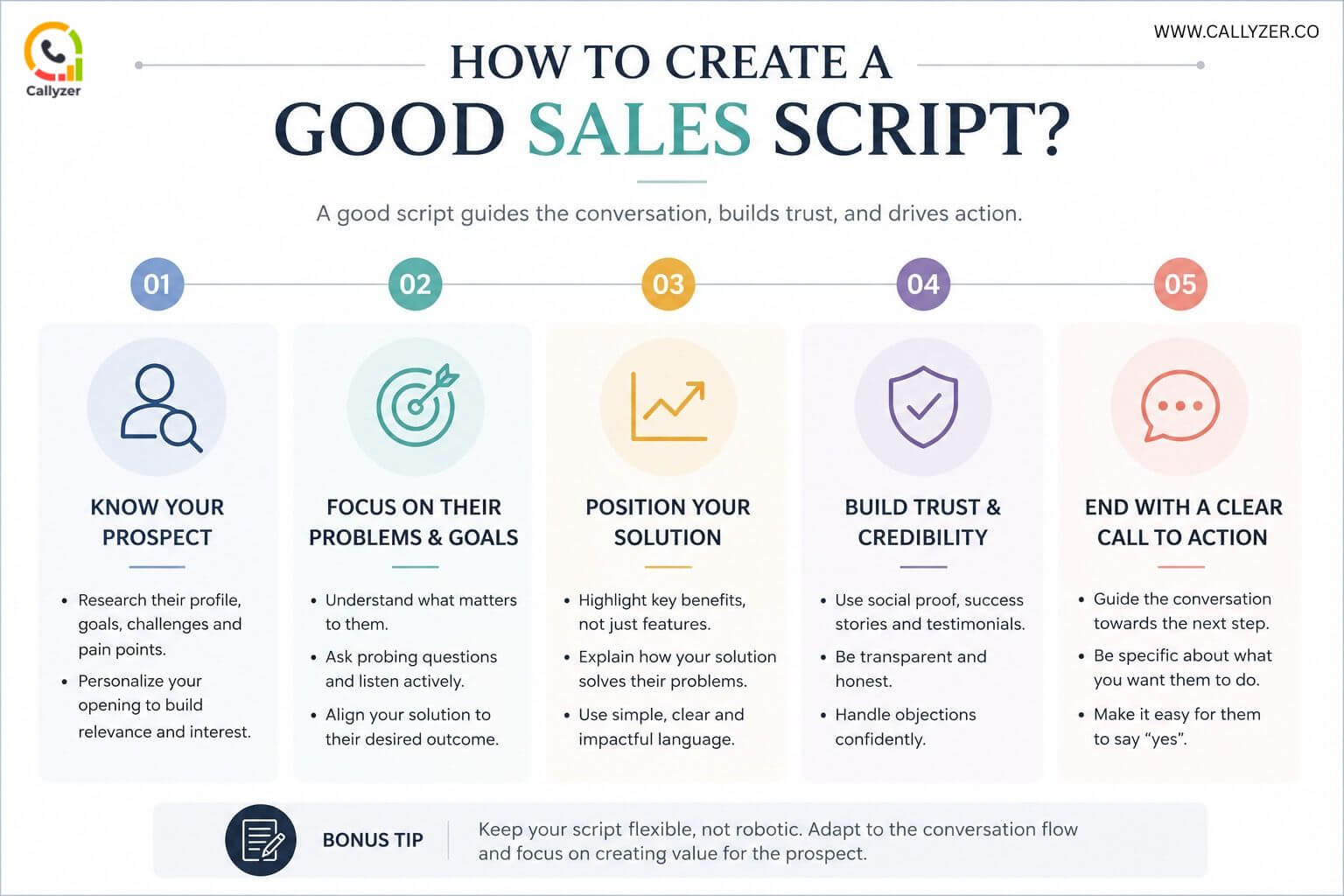
What Makes a Good EdTech Sales Pitch?
Know What Your Prospect Actually Needs
Before you dial, you should know at least one thing about the person you are calling. Their exam goal, their educational background, the stage they are at in life.
When you open a call with something specific to them, they feel like you are actually prepared. That is a much better start than a generic "Hi, I am calling from XYZ Company."
Spend 2 minutes on LinkedIn or the lead form before each call to gather all the required information. It makes a real difference for edtech lead conversion strategies.
How to Explain Why Your Course is Worth It
Most telecallers spend too much time listing what a course includes. What the prospect actually wants to know is what changes for them after they finish the course. Talk about that instead of only explaining about the course.
If you have a student who went from failing mock tests to clearing the exam, say that. One real outcome beats a list of features every time.
How to Sound Trustworthy on a Cold Call
Trust is the biggest problem in EdTech sales. A lot of students have paid for courses that did not deliver, so they are careful. The way you build trust on a call is not by making big promises. It is by being specific, using real names and real results, and not rushing them into a decision.
Customer stories work better than anything else here. If you have one that fits the prospect's situation, use it early.
Why Sales Teams Should Help Build the Script
Your best edtech sales scripts do not come from managers sitting in a meeting room.
They come from the agents who are on the phones every day and have found what actually works. Get them involved. Have them share what openers are getting longer calls and what objections they keep running into.
How Long Should an EdTech Sales Pitch Be?
The first sales pitch for edtech should be in between 90 seconds and 2 minutes. That is enough time to show you know something about the prospect, explain what the course does, and ask for a next step.
It is not enough time to close the deal, and that is fine. The goal of the first call is a second conversation, not a payment.
Keep it short. If the call goes longer because the prospect is asking questions, great. But do not stretch it because you have more things to say.
5 Effective Sales Pitches for Edtech Companies
1. Building a Relationship

Priya: Hi, [Anjali]! This is Priya calling from XYZ company. How are you doing today?
[Pause for Response]
Priya: Great to hear! I came across your impressive achievements on LinkedIn, particularly your outstanding 90% marks in the science stream. Huge congratulations on that!
[Pause for Response]
Priya: I'm calling to share an exciting opportunity with you. At XYZ company, we specialize in personalized courses taught by industry experts, offering a holistic approach to education.
[Pause for Response]
Priya: Given your academic background, our programs would be a perfect fit for you. Can I take a moment to share more details?
[Pause for Response]
Priya: Fantastic! We've had success stories from individuals like [mention a success story or two], and I'd love to offer you a complimentary trial or demo session to experience the benefits firsthand. What do you think?
[Pause for Response]
Priya: If you're interested, I can send you some information via email, and we can schedule a quick call to discuss further. What time works best for you tomorrow?
[Pause for Response]
Priya: Excellent! I'll send over the details shortly. Feel free to reach out if you have any questions in the meantime. Thank you for considering XYZ company for your educational journey.
Priya: Have a great day, Anjali!
2. Research before calling
Priya: Hello, is this Anjali?
[Pause for Response]
Priya: Hi Anjali, this is Priya calling from XYZ Company. How are you today?
[Pause for Response]
Priya: Great to hear! I hope I'm not catching you at a bad time. Can we talk for a few minutes?
[Pause for Response]
Priya: Fantastic! I noticed that you are preparing for government exams, particularly in Banking. May I ask what inspired you to pursue a government job despite having an MBA degree? With your background, you could easily secure a Management or Finance job.
[Pause for Response]
Priya: That's commendable, Anjali. We understand the importance of your goals, so I'm reaching out. At XYZ Company, we have specialized courses tailored to prepare for government exams.
[Pause for Response]
Priya: Absolutely. We conduct regular classes for each subject throughout the week, and on weekends, we organize tests to assess your progress and identify areas for improvement.
[Pause for Response]
Priya: Our courses are valid for a lifetime until you secure your desired job. Plus, we offer flexible payment options, making it easier for you to manage.
[Pause for Response]
Priya: Of course, Anjali! I'll share all the details on WhatsApp shortly. Take your time to review them, and feel free to reach out if you have any questions.
Anjali: Thanks, Priya. I appreciate it.
Priya: Not a problem. Let me know if you need anything else or have further questions. Have a great day ahead, Anjali!
3. Cold calling script that uses referrals

Priya: Hello Anjali, how are you?
[Pause for Response]
Priya: I recently had a conversation with Raj Mehta, who happens to be your friend. He mentioned that you're actively seeking classes to enhance your soft skills.
[Pause for Response]
Priya: I understand the importance of refining soft skills, and it's great that you're proactively looking for opportunities to uplift them. At XYZ, we specialize in providing comprehensive soft skills training that can significantly benefit you personally and professionally.
[Pause for Response]
Priya: Our XYZ trainers are seasoned professionals dedicated to empowering individuals like you. We cover a wide range of soft skills, including communication, leadership, and interpersonal skills, tailored to meet the demands of today's dynamic work environment.
[Pause for Response]
Priya: By enrolling in our classes, you'll not only gain valuable insights and techniques but also practical experience to apply these skills in real-world scenarios. It's about honing your strengths and addressing areas for improvement in a supportive and constructive environment.
[Pause for Response]
Priya: I would love to provide more details about our upcoming soft skills classes. Can we schedule a brief call to discuss your specific needs and how our courses can align with your goals?
[Pause for Response]
Priya: Thank you for considering XYZ for your soft skills development journey, Anjali. I believe this could be a transformative experience for you.
[Pause for Response]
Priya: Looking forward to hearing from you. Have a great day!
4. Offering a benefit
Priya: Hello Anjali, this is Priya from XYZ Company. How are you today?
[Pause for Response]
Priya: I'm reaching out to contact you because we have an exciting opportunity that aligns perfectly with your goals. We're currently offering an in-depth Digital Marketing course at XYZ Company.
[Pause for Response]
Priya: Now, here's the kicker – when you enrol in our Digital Marketing course, we're thrilled to offer you a unique advantage. We'll personally get you enrolled in a reputable company for an internship, completely free of charge.
[Pause for Response]
Priya: We understand the importance of hands-on experience in digital marketing. This internship opportunity is designed to complement your learning journey, providing you with real-world exposure and a chance to apply the skills you'll acquire during the course.
[Pause for Response]
Priya: Our Digital Marketing course covers everything from SEO and social media marketing to analytics and strategy. It's a comprehensive program crafted to equip you with the knowledge and practical skills demanded by today's digital landscape.
[Pause for Response]
Priya: I'd love to provide you with more details and discuss how this unique internship opportunity can benefit you specifically. Are you available for a brief call to explore this further?
[Pause for Response]
Priya: Feel free to ask any questions you may have, and I'll be happy to provide additional information.
[Pause for Response]
Priya: Thank you for considering XYZ Company for your digital marketing education. I truly believe this could be a game-changer for your career.
[Pause for Response]
Priya: What time works best for you for a short call? I am Looking forward to the opportunity to discuss this exciting prospect with you. Have a great day!
5. Probing the prospect’s pain points

Priya: Hello Anjali, this is Priya from XYZ Company. How are you doing today?
[Pause for Response]
Priya: Congratulations on your recent graduation from engineering college!
[Pause for Response]
Priya: We often hear from recent graduates like yourself about the gap between academic learning and real-world applications. Have you faced any challenges in applying your engineering knowledge practically or in securing a job that aligns with your skills?
[Pause for Response]
Priya: At XYZ Company, we've developed a specialized program that focussing on in-depth Android development. This program is designed to bridge the gap between academic learning and the practical skills needed in the industry.
[Pause for Response]
Priya: Not only does our program provide hands-on experience in Android development, but it's also crafted to help you secure jobs in reputed companies.
[Pause for Response]
Priya: Your journey is important to us, Anjali, and we're here to support you in taking the next step toward a successful career in Android development.
How Do EdTech Teams Know Which Pitch is Working?
Running 5 different scripts without a call monitoring software is just guessing.
Here is a simple 2-day check you can run with Callyzer to find out which pitch is actually converting.
Day 1: Split your scripts across agents and call
Assign Script 1 to half the team and Script 2 to the other half. Same time slot for everyone. Let them run their calls normally.
By the end of day, open the Callyzer dashboard.
Look at three things: Average call duration per agent, Pickup rate by time slot, and which hours are getting the most responses.
A pitch that is landing keeps people talking. One that does not get cut in the first 30 to 40 seconds. And if pickup is low across the board, the time slot might be the problem, not the script.
Callyzer breaks both apart so you are not fixing the wrong thing.
Day 2: Listen to 5 recordings from each side
Callyzer syncs call recordings automatically. Pick 5 calls from the better-performing group and 5 from the other. Listen for the moment the conversation shifts, either the prospect starts asking questions or starts looking for a way to hang up.
The recording catches what the metric misses. A 3-minute call is not always a good call. Sometimes the agent is talking for 2.5 minutes and the prospect is just waiting to leave. The recording tells you the truth.
By afternoon on Day 2 you have duration data, pickup rates by time slot, follow-up counts, and real call recordings side by side. Pick the script that wins across all four and roll it out to the full team for maximizing edtech sales.
Two days. No spreadsheets. No end-of-week guessing.
Still relying on guesswork to improve your sales pitch?
Find your winning pitch with real call data from Callyzer, not guesswork.
FAQs on Sales Pitches for EdTech Companies
How can sales teams improve their pitch performance?
Have your team lead listen to 5 calls a week and mark where the conversation drops off. Fix that one moment. Most teams rewrite the whole script when only one part is broken.
What is a good sales pitch for EdTech?
A good edtech sales pitch gets the prospect to agree to a next step, not close a deal on the first call. Keep it under 2 minutes, say one thing that is specific to them, and ask for a small commitment before you hang up.
What are the sales strategies for an EdTech startup?
Three things make the biggest difference early on. Referral calls convert better than cold calls because the prospect already has a reason to hear you out. Calling between 4 PM and 5 PM gets you better pickup than morning slots when people are busy or commuting. And most agents quit after 2 follow-ups when the average EdTech conversion happens somewhere between the 5th and 12th contact. Build a simple follow-up sequence and stick to it. That alone puts you ahead of most teams.
Can you provide examples of successful sales pitches used by edtech companies?
Some sales pitch examples used by edtech companies include showcasing the impact of their product on student learning outcomes, providing data-driven results, and offering personalized solutions for educational institutions.
What are some key elements to include in a sales pitch for an edtech company?
Do not overcomplicate it. Tell them what the course does, share one student story that actually happened, have your price answer ready before they ask, and end the call with a clear next step. That is all you need on the first call. The brochure can wait for WhatsApp.
What are some best practices for creating a compelling sales pitch presentation for edtech products?
Some best practices for creating a compelling sales pitch presentation for edtech products include keeping the presentation concise and focused, using visuals to supplement key points, and tailoring the pitch to address the specific needs and challenges of the audience.
How can a startup create a successful sales pitch for their edtech product?
Sit down and think about the last student who said yes and the last one who said no. What was different? That gap is your pitch. Fancy frameworks can wait. Most early-stage EdTech teams lose students because the prospect did not feel confident enough to pay, not because the price was too high. Fix the trust problem first. Use real names, real numbers, and let them try something small before asking for a commitment.
What is the importance of a pitch deck in the sales process for edtech companies?
A live pitch deck usually backfires. The prospect starts reading the slide and you lose them mid-sentence. Get them agreeing on one thing during the call, then send the deck on WhatsApp. "Take a look and let's catch up tomorrow at 5?" works better than any presentation.
Can you provide examples of successful sales pitches used by edtech companies?
All 5 scripts in this guide come from real calling situations. One starts with something the agent found on LinkedIn. Another is for someone preparing for a government exam. The third opens with a referral. The fourth offers a free internship upfront for a digital marketing course. The fifth is for an engineering fresher still figuring out next steps. Find the one that matches your prospect and make it your own.
How can edtech companies effectively follow up after delivering a sales pitch?
Right after the call, send the course details on WhatsApp. Do not wait. Two hours is already pushing it. Day 2 is a quick check-in call. Day 5 you send something actually worth opening, a result from your last batch, a free session, anything except "just following up." Day 10 is your last call. If nothing by then, move on. Pestering someone who is not interested does not change their mind, it just kills the chance of them coming back later on their own.